
All Aboard Pittsburgh's Gateway Clipper
See the City of Bridges from its most scenic vantage point By Carolyn Burns BassOn Pittsburgh’s Gateway Clipper, every bend tells a story
All photos are ©2025 by Carolyn Burns Bass
Where: Pittsburgh, PA
What: Gateway Clipper Cruise
Boarding: Station Square Dock, 350 West Station Square Dr.
Fun Factor: 10
Three major waterways come together in the heart of Pittsburgh, their banks now lined by skyscrapers, business and entertainment centers, greenways, and brick rowhouses. One of the of the best ways to appreciate the importance of these rivers to the life of Pittsburgh is on a Gateway Clipper cruise.
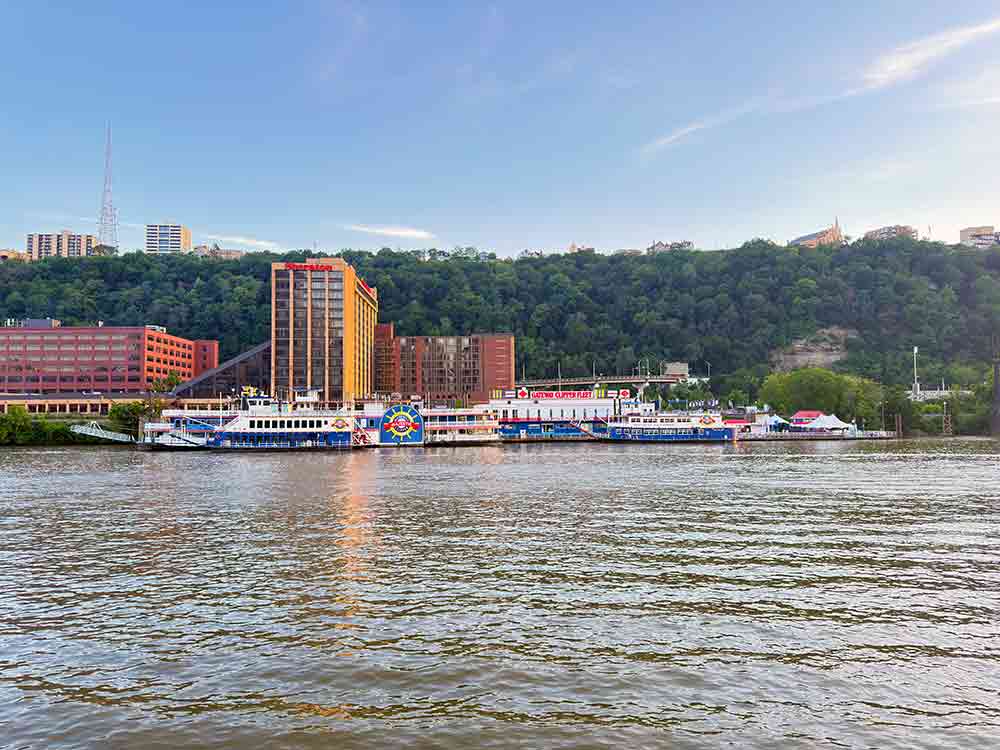
For more than six decades, the Gateway Clipper Fleet has crisscrossed the Allegheny, Monongahela and Ohio rivers, turning a sightseeing tour into a moving lesson in industry, architecture, and civic pride. Boarding a Clipper riverboat feels part nostalgia—the paddlewheel silhouette and white railings nod to a bygone river era—and part instant immersion in the city’s living geography.
The Gateway Clipper Fleet offers several different cruises, but most popular is the Three Rivers sightseeing cruise. This 90-minute loop is narrated by the ship captain with insights into the city’s history and development into the modern age.
Architecture Tells the Story of Pittsburgh Development
As the boat eases downstream from the downtown docks, the first landmark to command attention is Point State Park, where the Allegheny and Monongahela meet and form the Ohio. The park’s iconic fountain—a jet of water rising from the tip of “the Point”—looks impossibly cinematic from the river, framed by the low stone walls of Fort Pitt’s reconstructed bastions and the contemporary sweep of glass and concrete beyond. From the deck you’ll hear the captain recount how Fort Pitt’s strategic position shaped the nation’s early frontier history and secured the city on the map.
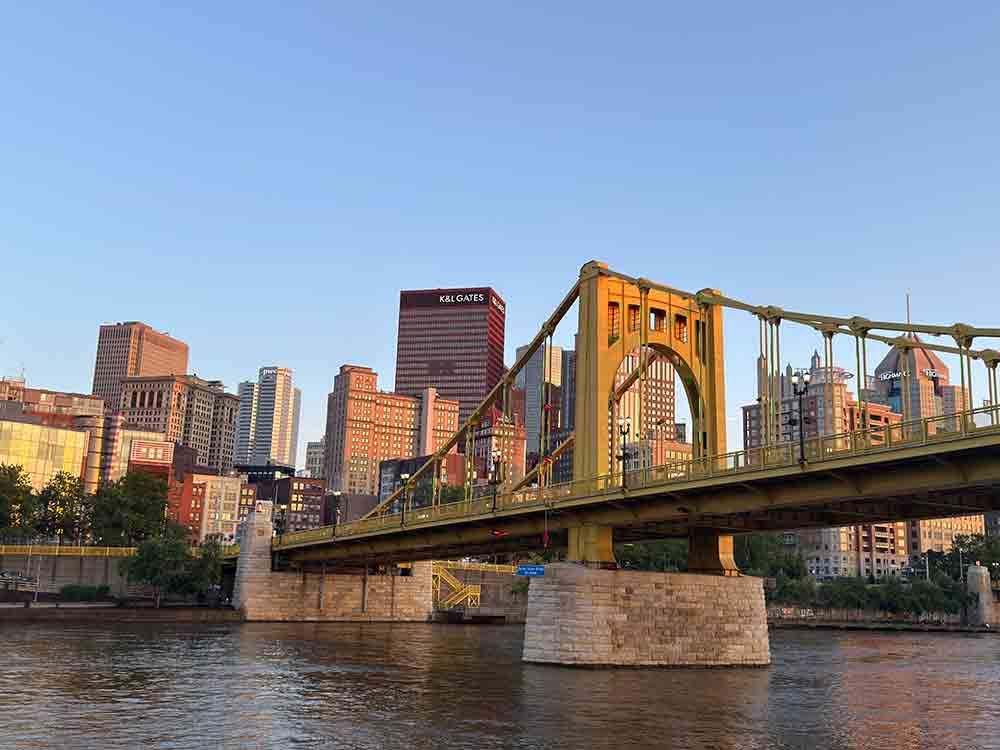
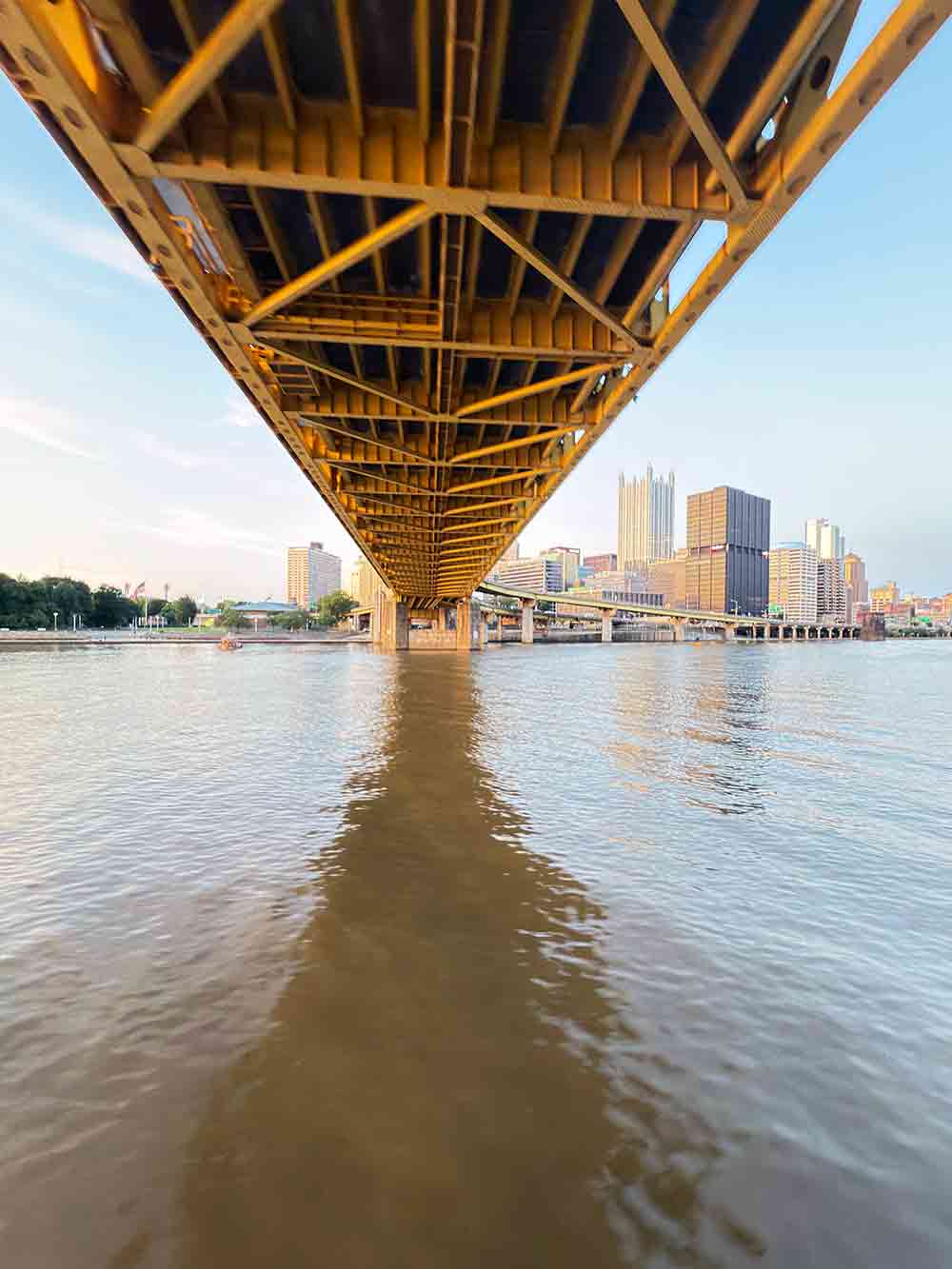
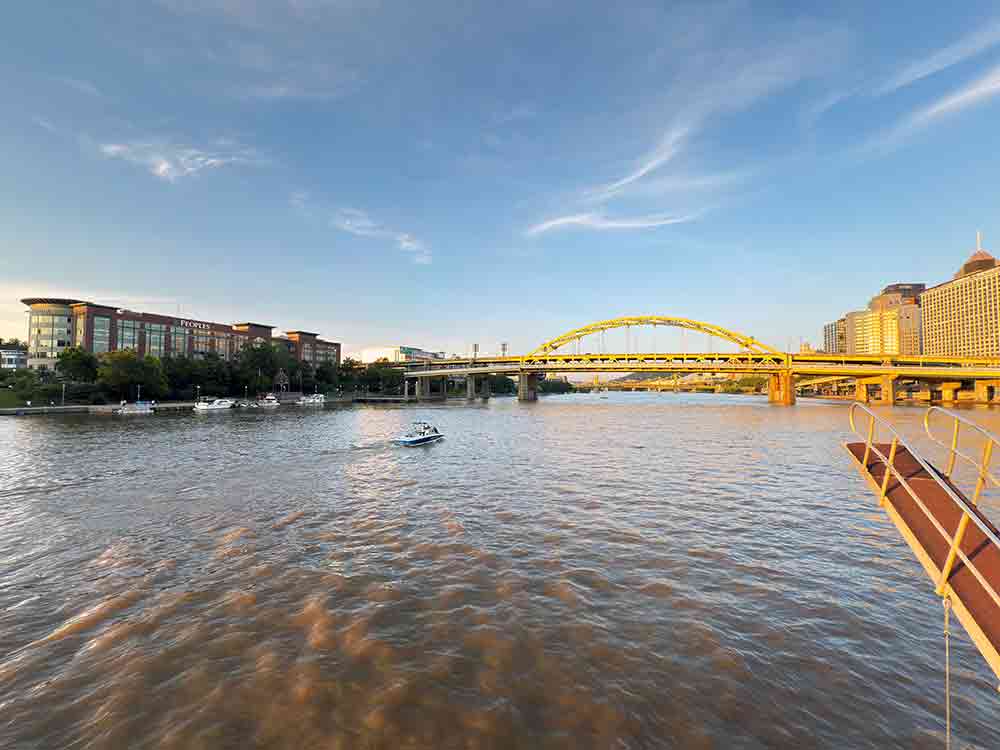
Beyond the Point, Pittsburgh’s bridges become the running commentary. The Robert (Roberto) Clemente Bridge, a pedestrian-friendly span painted a distinct yellow, pops into view and ties downtown to the North Shore and PNC Park. The Clipper passes beneath a succession of arched and truss bridges—each built for different eras and engineering ideas—and their reflections stitch the river’s surface with geometry. Bridge-spotting turns into a kind of human-scale architecture lesson in the ornate masonry of earlier spans, the industrial function of steel trusses, and the rhythmic repetition of suspension cables that frame city vistas.
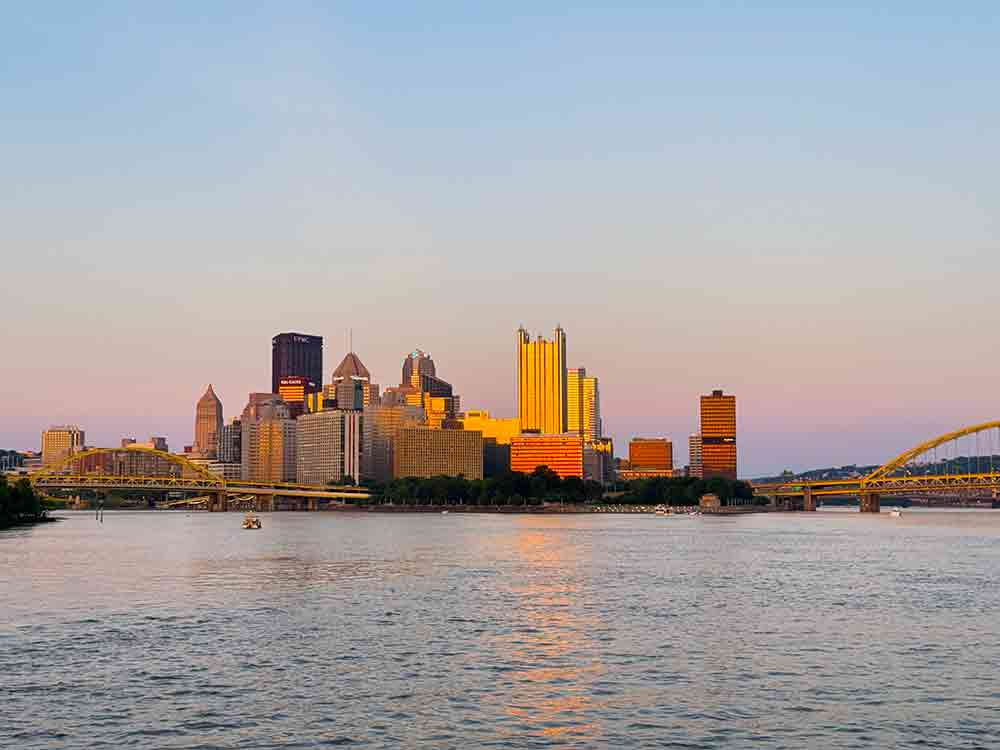
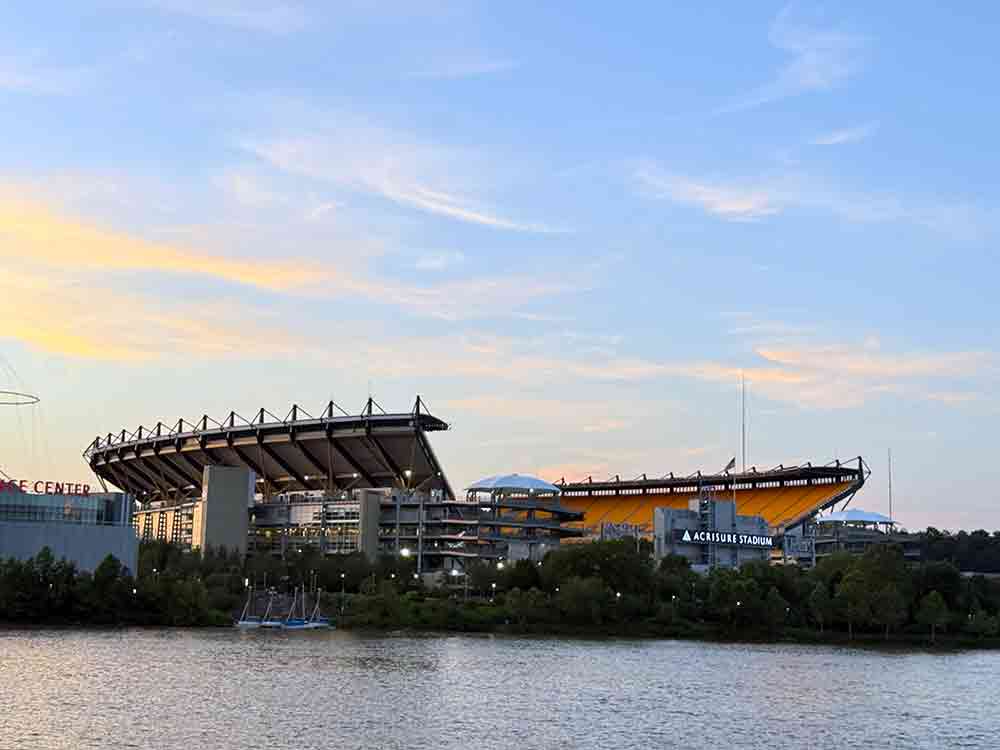
Architecture buffs will find much to admire along the route. From the water, PPG Place looks like a crystalline forest—an assemblage of glass spires that reference gothic ornament in a distinctly modern material. Nearby, the brick facades and vertical rhythms of older banking and office buildings remind you that Pittsburgh’s skyline is a conglomerate of boom times: steel fortunes, mid-century corporate growth, and contemporary revitalization. The Clipper narration often points out PNC Park and Acrisure Stadium on the north bank, the museums clustered on the bluff, and the refurbished warehouses that now host restaurants and galleries—each a chapter in Pittsburgh’s reinvention from industrial powerhouse to creative, livable city.
Sports and Culture Converge on the North Shore
It’s hard not to be awed when approaching the Allegheny’s North Shore where sports and culture converge. The sight of PNC Park with its brick façade, open sightlines, and river-side location delights both baseball fans and casual viewers. On game days the river becomes a festive artery, with fans arriving by water taxi or riverboat shuttles. From this angle you can appreciate how the stadiums, the Andy Warhol Museum, and the North Shore’s promenades knit together public life and place. If you time your cruise at dusk, the stadium lights and skyline illumination—the “golden hour” of the steel city—make for unforgettable photos.
Pittsburgh is not just a city of rivers and bridges, but of hillsides and inclines. The Duquesne and Monongahela Inclines—funiculars that climb steeply from river level to the residential terraces above—punctuate the skyline with their historic machinery and wooden cars. From the Clipper deck they look like cable cars paused in a postcard, and the narration will often suggest taking an incline ride after disembarking to get the classic Pittsburgh panorama from Mount Washington. The juxtaposition of river, bridge, and hillside neighborhood is one of the region’s most photogenic compositions.
The Gateway Clipper experience also highlights the small, human-scaled sights that reveal local color. Passing boathouses, riverside trails, and summer concert stages, you’ll see kayakers and stand-up paddlers threading the same waters once used by tugboats and steamboats. Along the downtown riverfront, murals and public art—including the “Gateway to Pittsburgh” series near the docks—add narrative layers, turning a stroll to the pier into a mini-history walk before you even board.
Cruise Styles and Special Events on the Water
Practical pleasures matter, too. The Fleet offers a range of cruise styles, from family-friendly daytime trips to evening dinner cruises with live music and dancing. The larger boats include indoor salons and open decks (handy on an unpredictable Pittsburgh afternoon), bars and snack stations, and friendly crews who balance storytelling with local banter. Private charter options mean the Clipper can anchor a special event—weddings, corporate outings, or a memorable river shuttle to a Pirates or Steelers game.
For photographers, timing is everything. Morning light softens the city’s steel tones; late afternoon brings warm reflections off glass buildings; and twilight draws out neon and stadium lights. If you want quiet, choose a weekday or off-season cruise. For liveliest atmosphere, book a weekend or holiday cruise. Wherever you stand on deck, binoculars and a wide-angle lens enhance the views and bring the narration into sharper focus.
A Gateway Clipper cruise is a brilliant way to learn about the city and what it offers residents and tourists alike. As the boat glides back toward its dock, the downtown skyline folding into view, you realize you’ve got a new map of Pittsburgh—one drawn in river bends, bridge lines, and the warm chatter of the narrator calling out another stop on the route.
